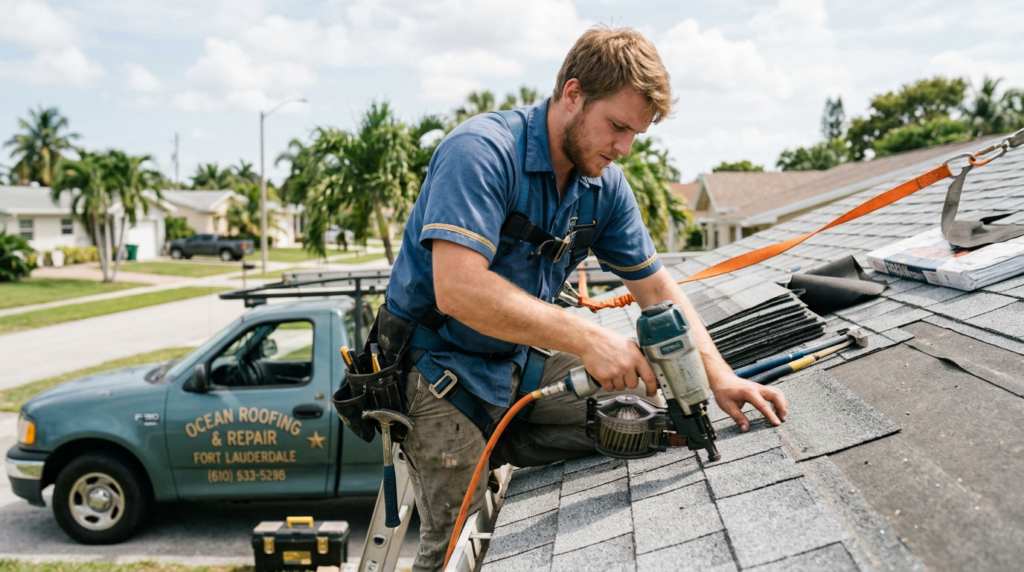
Roofing contractor insurance in Miami, FL typically costs between $15,000 and $35,000 per year for a complete package that includes general liability, workers’ compensation, and commercial auto coverage. Florida law requires roofing contractors to carry both workers’ comp and general liability insurance before they can obtain or renew their state license through the Department of Business and Professional Regulation (DBPR).
If you operate a roofing business in Miami-Dade County, understanding these insurance requirements isn’t optional — it’s the foundation your entire business stands on.
Why Roofing Contractors in Miami Need Specialized Insurance
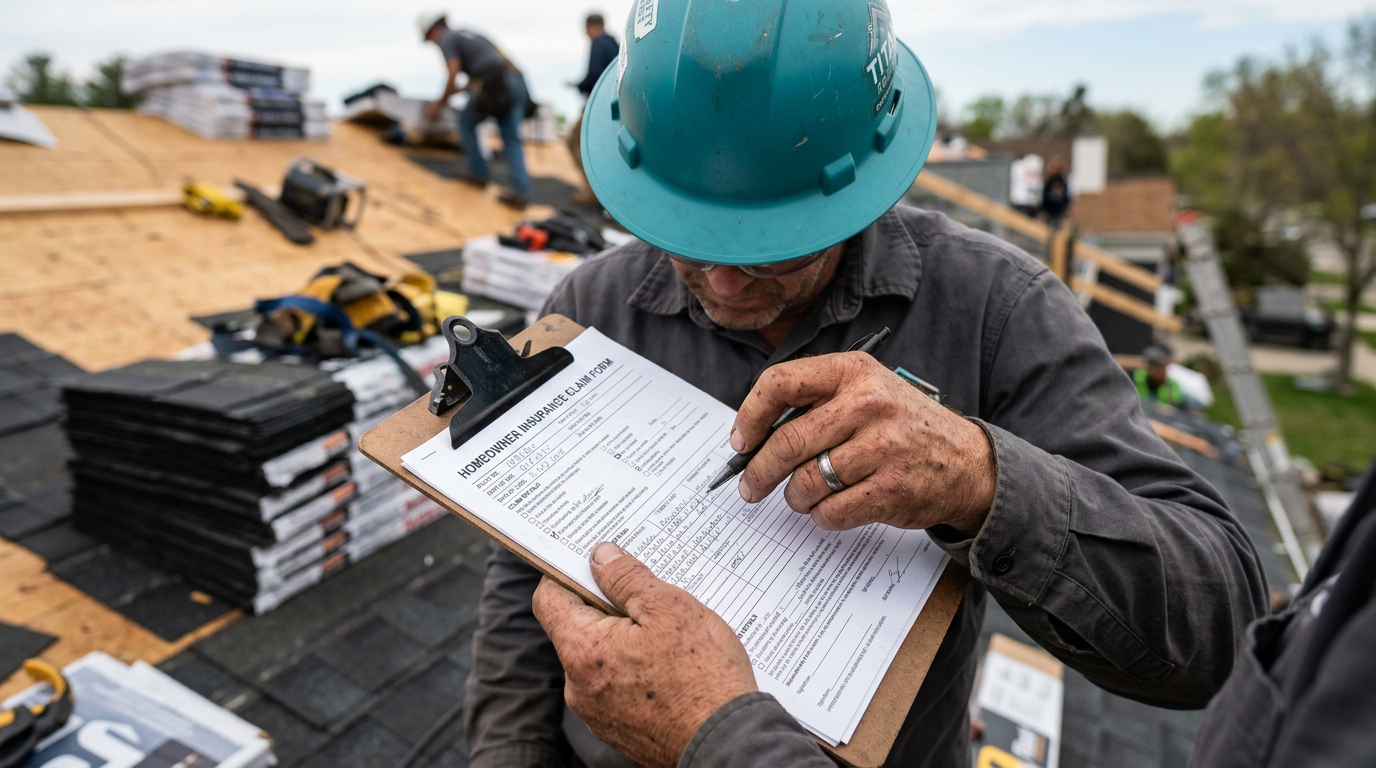
Miami’s roofing industry operates in one of the highest-risk insurance environments in the country. The combination of year-round hurricane exposure, extreme heat, elevated fall risks, and Florida’s litigation-friendly legal climate means that standard business insurance simply won’t cut it for roofers.
Roofing consistently ranks among the most dangerous trades in construction, with approximately 29.9 fatalities per 100,000 full-time workers according to industry data. In South Florida, those risks are amplified by:
- Hurricane and windstorm exposure — Miami-Dade County is ground zero for tropical storm activity, creating both higher demand for roofing work and greater risk of on-the-job injuries during storm season
- Extreme heat — Heat exhaustion and heat stroke claims are increasingly common and costly for roofers working on Miami rooftops where temperatures can exceed 150°F
- High property values — A botched installation or leak on a Coral Gables estate or Brickell high-rise can generate six-figure property damage claims
- Litigious environment — Florida homeowners and commercial property owners are increasingly willing to sue over roofing defects, especially after hurricane seasons
Without the right roofing contractor insurance in Miami, a single workplace accident or property damage claim could bankrupt your business overnight.
Insurance Requirements for Florida Roofing Contractors
Florida has some of the strictest insurance requirements for roofing contractors of any state. Here’s exactly what you need to stay licensed, compliant, and protected.
Workers’ Compensation Insurance
Under Florida Administrative Code Rule 69L-6.021, all construction industry employers — including roofing contractors — must carry workers’ compensation insurance with even one employee. This is stricter than the four-employee threshold that applies to non-construction businesses in Florida.
Key details for Miami roofers:
- Class code 5551 (Roofing — All Kinds and Drivers) carries one of the highest rates in the NCCI manual, typically $18–$22 per $100 of payroll
- For a crew of five roofers earning $50,000 each, that translates to $45,000–$55,000 in annual workers’ comp premium alone
- The good news: workers’ comp rates for code 5551 decreased 11.04% for 2026, and minimum premiums are now set at $25,000 per employer
- Exemptions are available for owners who hold at least 10% of the company — but only three officers per company can claim them, and exempt owners cannot collect benefits if injured
Penalties for operating without workers’ compensation coverage in Florida include stop-work orders, fines up to $1,000 per day, and personal liability for all uncovered claims.
General Liability Insurance
Florida requires roofing contractors to carry general liability insurance with minimum coverage of $300,000 for bodily injury and $50,000 for property damage as a condition of DBPR licensure. However, these minimums are far below what the market demands.
In practice, nearly all roofing contractors in Miami carry $1,000,000 per occurrence / $2,000,000 aggregate coverage. Commercial projects frequently require $2,000,000/$4,000,000 or higher, and general contractors typically will not hire a roofer who cannot provide proof of adequate GL limits.
Your general liability policy should include products and completed operations coverage — this is critical for roofers because roof defects often surface months or years after installation. If a roof you installed leaks during next year’s hurricane season and causes interior water damage, completed operations coverage responds to that claim.
Commercial Auto Insurance
If your roofing business owns, leases, or uses vehicles for work — and virtually every roofer does — you need commercial auto insurance. Miami’s congested roads and the need to haul materials, equipment, and crew across job sites make this coverage essential. Most carriers recommend $1,000,000 combined single limit (CSL) for bodily injury and property damage.
Additional Coverages to Consider
- Inland marine insurance — Protects your tools, scaffolding, nail guns, compressors, and materials in transit between job sites. Personal auto and property policies do not cover business equipment on the road.
- Commercial property insurance — Covers your office, warehouse, and stored inventory from fire, theft, and weather damage
- Commercial umbrella insurance — Provides an extra layer of liability protection beyond your GL and auto limits. Given that roofing claims can reach seven figures, an umbrella policy is a smart investment.
- Surety bonds — Required for certain commercial and government projects. Bonded roofers can bid on institutional work with higher profit margins.
How Much Does Roofing Insurance Cost in Miami?
Roofing contractor insurance is among the most expensive in the construction industry. Here’s what Miami roofers can expect to pay:
| Coverage Type | Typical Annual Cost |
|---|---|
| Workers’ Compensation (5-person crew) | $45,000–$55,000 |
| General Liability ($1M/$2M) | $8,000–$25,000 |
| Commercial Auto | $3,000–$8,000 |
| Inland Marine / Tools | $500–$2,500 |
| Complete Package | $15,000–$35,000+ |
Note: Costs vary significantly based on crew size, annual revenue, claims history, types of roofing work performed, and your Experience Modification Rate (EMR).
Several factors drive roofing insurance costs higher in Miami specifically:
- Hurricane zone rating — Miami-Dade County’s coastal location increases property and casualty risk across all policy types
- Higher payroll costs — South Florida’s competitive labor market means higher wages, which directly increase workers’ comp premiums
- Urban density — Working on multi-story buildings, condos in Brickell, and high-rises in Downtown Miami carries more liability than single-story residential work
- Claims frequency — The greater Miami area has higher-than-average insurance claim rates, which affects community rating for all local businesses
How to Lower Your Roofing Insurance Premiums
Even with the inherently high cost of roofing insurance, there are proven strategies to reduce your premiums without sacrificing coverage:
1. Manage Your Experience Modification Rate (EMR)
Your EMR compares your company’s claim history to similar-sized roofing companies. An EMR above 1.00 on class code 5551 can mean tens of thousands of dollars in extra premium. Invest in safety training, close open claims promptly, and implement return-to-work programs.
2. Segregate Payroll Accurately
If your business includes employees who perform non-roofing work — office staff, estimators, or material handlers — maintain separate payroll records. This ensures those employees are rated at lower class codes rather than the expensive 5551 rate.
3. Collect Subcontractor Certificates of Insurance
This is one of the most expensive mistakes Miami roofers make. If you hire a subcontractor who lacks workers’ comp coverage, their payroll gets added to your policy at audit — rated at the full 5551 rate. Always collect current certificates of insurance before any sub starts work.
4. Implement a Drug-Free Workplace Program
Florida offers premium credits for businesses that maintain a certified drug-free workplace. Combined with a documented safety program, this can reduce your workers’ comp premium by 5–10%.
5. Work With an Independent Agent
An independent insurance agent who understands the roofing industry can shop multiple carriers — including specialty and surplus lines markets — to find the best combination of coverage and price. Some carriers have exited the Florida roofing market due to storm-related losses, making access to multiple markets critical.
DBPR Licensing and Insurance Compliance in Miami
To legally operate as a roofing contractor in Florida, you must hold one of two license types issued by the Florida DBPR:
- Certified Roofing Contractor (CCC) — Allows you to work anywhere in Florida. Requires passing the state Business and Finance and Trade Knowledge exams, four years of experience (including one year supervisory), and proof of insurance.
- Registered Roofing Contractor — Allows you to work only in the county or municipality where you are registered, with requirements varying by jurisdiction.
Both license types require you to provide a certificate of insurance naming the DBPR as a certificate holder. Any lapse in coverage — even for a single day — can result in immediate license suspension, meaning you cannot legally work until coverage is restored.
In addition, Miami-Dade County enforces its own building code requirements (the Florida Building Code with Miami-Dade County-specific amendments), including strict wind resistance standards for roofing materials and installation. Carrying adequate insurance ensures your business is protected if a code-compliance dispute arises.
Florida also requires roofing contractors to complete 14 hours of continuing education annually and pass background checks as part of the licensing process.
Frequently Asked Questions
How much does roofing contractor insurance cost in Miami, FL?
Most Miami roofing contractors pay between $15,000 and $35,000 per year for a complete insurance package including general liability and workers’ compensation. Costs can be significantly higher for larger operations — companies with $1M–$5M in annual revenue typically pay $25,000 to $85,000. Your specific premium depends on crew size, revenue, claims history, types of roofing work, and your EMR.
Is workers’ comp required for roofing contractors in Florida?
Yes. Florida law requires all construction industry employers, including roofing contractors, to carry workers’ compensation insurance starting with just one employee. This is stricter than the four-employee threshold for non-construction businesses. Sole proprietors and corporate officers who own at least 10% of the company may apply for an exemption by filing Form DBPR-CU-100 and paying a $50 fee, but exempt individuals cannot collect workers’ comp benefits if injured.
What insurance do I need to get a Florida roofing contractor license?
To obtain a Certified Roofing Contractor (CCC) license, you must provide proof of general liability insurance (minimum $300,000 bodily injury / $50,000 property damage) and workers’ compensation insurance to the DBPR. Most contractors carry $1,000,000/$2,000,000 GL limits because these are the industry standard required by general contractors and commercial clients. Your insurer must issue a certificate of insurance naming the DBPR as a certificate holder.
What is NCCI class code 5551 and why does it matter?
NCCI class code 5551 (Roofing — All Kinds and Drivers) is the workers’ compensation classification assigned to roofing contractors. It carries one of the highest premium rates in the entire NCCI manual — typically $18 to $22 per $100 of payroll in Florida. This rate directly determines how much you pay for workers’ comp coverage, making EMR management and payroll segregation critical cost-control strategies for roofers.
Can I get roofing insurance in Miami if I have prior claims?
Yes, but you may need to work with specialty or surplus lines carriers. An independent insurance agent with access to non-standard markets can often find coverage for roofers with prior claims, though premiums will be higher than for contractors with a clean loss history. Improving your EMR through safety programs and careful claims management will help reduce costs over time.
Get Roofing Contractor Insurance in Miami — Free Quote
Protecting your roofing business in Miami starts with the right insurance partner. At SOVA Insurance, we’re an independent agency that works with multiple carriers — including specialty construction markets — to find the best combination of coverage and price for your roofing company. Whether you’re a small residential crew or a growing commercial operation, we’ll help you stay licensed, compliant, and fully protected.
We speak English, Russian, and Ukrainian, and we take the time to explain every coverage option so you can make confident decisions about your business. Contact SOVA Insurance today for a free, no-obligation roofing contractor insurance quote.
The information provided in this article is for general informational purposes only and does not constitute legal, financial, or professional insurance advice. Coverage options, pricing, requirements, and regulations vary by carrier, policy, and jurisdiction and are subject to change. Always consult with a licensed insurance professional and review the terms of any policy carefully before making coverage decisions. SOVA Insurance makes no representations or warranties regarding the accuracy, completeness, or applicability of the information presented here, and assumes no liability for any decisions made in reliance on this content. For personalized guidance, contact a licensed agent directly.