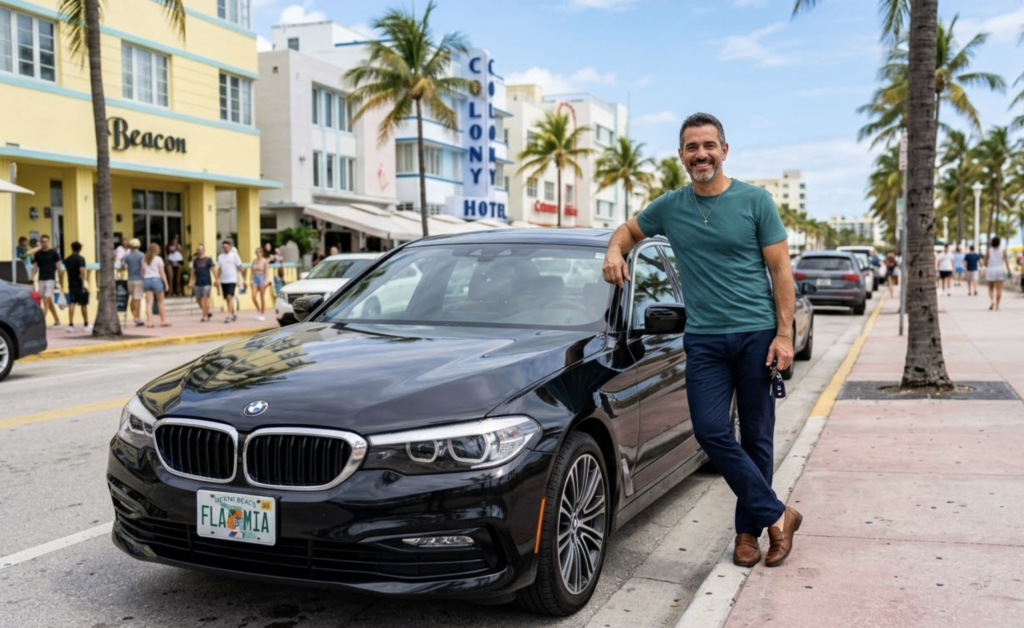
Rideshare insurance in Miami, FL fills a critical coverage gap that every Uber and Lyft driver faces — the period when your rideshare app is on but you haven’t yet matched with a passenger. During this time, your personal auto insurance won’t cover you (because you’re engaged in commercial activity), and Uber or Lyft’s coverage is minimal. A rideshare endorsement or policy typically costs $15–$30 per month on top of your personal auto premium and eliminates this dangerous gap entirely.
SOVA Insurance helps Miami rideshare drivers find affordable coverage that works seamlessly with Uber and Lyft’s insurance programs — protecting you during every phase of your trip, from app-on to drop-off.
The Rideshare Coverage Gap Explained
When you drive for Uber or Lyft in Miami, your insurance coverage changes depending on which phase of a trip you’re in. Understanding these phases is critical because coverage gaps can leave you financially exposed:
Phase 0: App Off
You’re driving for personal reasons. Your personal auto insurance applies normally. No rideshare coverage is active.
Phase 1: App On, Waiting for a Ride Request
Your app is on and you’re available, but you haven’t been matched with a passenger. This is the danger zone:
- Personal auto: Most policies exclude coverage because you’re engaged in a commercial activity
- Uber/Lyft coverage: Provides only limited liability — typically $50,000 per person / $100,000 per accident bodily injury and $25,000 property damage. No collision or comprehensive coverage for your vehicle.
This is where most Miami rideshare drivers are unknowingly uninsured. If you cause an accident during Phase 1, your personal insurer can deny the claim, and Uber/Lyft’s coverage may not fully protect you or your vehicle.
Phase 2: En Route to Pick Up Passenger
You’ve been matched and are driving to pick up the passenger. Uber and Lyft provide:
- $1,000,000 liability coverage
- Contingent comprehensive and collision (with a deductible, typically $2,500)
- Uninsured/underinsured motorist coverage
Phase 3: Passenger in Vehicle
The passenger is in your car. Coverage is the same as Phase 2:
- $1,000,000 liability
- Contingent comprehensive and collision
- Uninsured/underinsured motorist
The bottom line: Phases 2 and 3 have strong coverage from the platforms. Phase 1 is the gap — and a rideshare endorsement fills it.
What Is a Rideshare Insurance Endorsement?
A rideshare endorsement (also called a TNC endorsement or ride-hailing endorsement) is an add-on to your existing personal auto insurance policy that extends your personal coverage to include Phase 1 rideshare driving.
What it does:
- Ensures your personal auto policy doesn’t exclude or void coverage while your rideshare app is on
- Provides liability, collision, and comprehensive coverage during Phase 1
- Creates seamless protection across all phases of rideshare driving
- Prevents your insurer from cancelling your policy for undisclosed commercial use
What it costs: Most Florida carriers charge $15–$30 per month ($180–$360/year) for a rideshare endorsement. Given the alternative — being completely uninsured during Phase 1, or having your personal policy cancelled for undisclosed rideshare activity — it’s one of the best values in auto insurance.
Why Miami Rideshare Drivers Face Higher Risk
Miami presents unique challenges that make rideshare insurance especially important:
Heavy traffic and high accident rates: Miami-Dade County consistently ranks among the top metro areas for traffic accidents in Florida. Driving all day on I-95, the Dolphin Expressway, and congested surface streets means more exposure to collisions.
Airport demand: Miami International Airport (MIA) is one of the busiest airports in the U.S., generating enormous rideshare volume. Airport pickups and drop-offs involve navigating complex terminal layouts, aggressive traffic, and tight spaces — all elevated risk factors.
Tourist passengers: Miami’s massive tourism industry means many of your passengers are unfamiliar with the area, which can lead to last-minute destination changes, distracting conversations, and navigation challenges.
Year-round driving: Unlike seasonal markets, Miami rideshare drivers work 12 months a year — meaning 12 months of exposure to Phase 1 coverage gaps.
Severe weather: Afternoon thunderstorms, flooding events, and hurricane season create dangerous driving conditions that increase accident risk.
How Much Does Rideshare Insurance Cost in Miami?
| Coverage Type | Estimated Cost |
|---|---|
| Rideshare endorsement (add-on to personal auto) | $15–$30/month |
| Full commercial auto policy (for full-time drivers) | $200–$400/month |
| Comprehensive + collision with rideshare endorsement | Included in personal auto + endorsement |
| Umbrella policy ($1M additional) | $15–$25/month |
For most part-time Miami rideshare drivers, a rideshare endorsement on your existing personal auto policy is the most cost-effective solution. It runs $180–$360/year and fills the Phase 1 gap without requiring a separate commercial auto policy.
For full-time rideshare drivers (30+ hours per week), a commercial auto policy may make more sense. It provides broader coverage, higher limits, and no phase-based exclusions. However, commercial auto is significantly more expensive — $2,400–$4,800/year — so it’s only worth it if you’re driving as your primary income source.
What Affects Your Rideshare Insurance Cost
- Hours driven per week: More hours = more exposure = higher premiums
- Vehicle type and age: Newer, more expensive vehicles cost more to insure
- Driving record: Clean records get lower rates; accidents and violations increase premiums significantly
- Personal auto carrier: Not all carriers offer rideshare endorsements in Florida. If your current insurer doesn’t, you may need to switch carriers.
- Coverage limits: Higher liability limits on your personal auto policy increase both your premium and the effectiveness of the rideshare endorsement
Florida TNC Insurance Law
Florida’s Transportation Network Company (TNC) law (Florida Statute 627.748) establishes the insurance framework for rideshare operations in the state:
- During Phase 1: TNCs (Uber, Lyft) must maintain at minimum $50,000/$100,000 bodily injury and $25,000 property damage liability
- During Phases 2 and 3: TNCs must maintain $1,000,000 in combined liability, plus uninsured/underinsured motorist coverage and contingent comprehensive/collision
- Driver’s personal policy: May exclude coverage during TNC activity. The law permits personal auto insurers to exclude rideshare activity without violating Florida insurance regulations
This legal framework means your personal auto insurer CAN legally deny your claim if you’re in an accident while your app is on — making the rideshare endorsement not just advisable, but essential.
Why Miami Rideshare Drivers Choose SOVA Insurance
As an independent agency, SOVA Insurance works with multiple carriers that offer rideshare endorsements in Florida — giving you options your current insurer may not have.
What we provide:
- Carrier comparison: Not every Florida auto carrier offers rideshare endorsements. We identify which carriers in our portfolio offer TNC coverage and compare rates so you get the best deal
- Seamless transition: If your current insurer doesn’t offer a rideshare endorsement, we help you switch to a carrier that does — without gaps in coverage
- Full-time driver solutions: For drivers who treat rideshare as a primary income, we can quote commercial auto policies designed for TNC operations
- Bundle savings: Combine your auto insurance (with rideshare endorsement) and renters or homeowners coverage for multi-policy discounts
- Multilingual service: Our agents speak English, Russian, and Ukrainian — serving Miami’s diverse gig economy workforce
Common Mistakes Miami Rideshare Drivers Make
1. Not disclosing rideshare activity to your insurer. If your personal auto carrier discovers you drive for Uber or Lyft and you haven’t disclosed it, they can cancel your policy retroactively and deny any pending claims.
2. Relying solely on Uber/Lyft’s insurance. Platform coverage has significant gaps during Phase 1 and high deductibles ($2,500 for collision during Phases 2–3). Your own rideshare endorsement provides first-dollar coverage without the gap.
3. Skipping collision and comprehensive coverage. If you only carry liability, neither your personal policy nor the platform covers damage to YOUR vehicle during Phase 1. You’d pay out of pocket for all repairs.
4. Not carrying uninsured motorist coverage. Miami has one of the highest uninsured driver rates in Florida. UM/UIM coverage protects you if an uninsured driver hits you while you’re waiting for a ride request.
5. Driving full-time without commercial auto. Part-time drivers can get by with a rideshare endorsement, but if you’re driving 40+ hours per week, a full commercial policy provides better protection and may be required by some TNC agreements.
Frequently Asked Questions
Do I need rideshare insurance if I drive for Uber or Lyft in Miami?
Yes. Your personal auto insurance likely excludes coverage while your rideshare app is active, and Uber/Lyft’s Phase 1 coverage is minimal ($50,000/$100,000 liability, no collision for your vehicle). A rideshare endorsement — costing just $15–$30/month — fills this gap and ensures you’re covered during every phase of driving.
How much does rideshare insurance cost in Miami?
A rideshare endorsement on your personal auto policy costs approximately $15–$30 per month ($180–$360/year). Full commercial auto coverage for full-time rideshare drivers costs $200–$400 per month. The endorsement is the most cost-effective option for part-time drivers and provides seamless coverage alongside the platform’s insurance programs.
Will my personal auto insurance cover me while driving for Uber?
Almost certainly not during Phase 1 (app on, waiting for a match). Florida law permits personal auto insurers to exclude TNC activity, and most major carriers do. If you cause an accident during Phase 1 without a rideshare endorsement, your personal insurer can deny the claim — leaving you responsible for all medical bills, vehicle repairs, and legal costs.
What’s the difference between a rideshare endorsement and commercial auto?
A rideshare endorsement is an add-on to your personal auto policy that extends coverage to Phase 1 TNC driving for $15–$30/month. A commercial auto policy is a standalone policy designed for business vehicle use, costing $200–$400/month. Part-time drivers should choose the endorsement; full-time drivers (30+ hours/week) may benefit from a commercial policy’s broader, gap-free coverage.
Does Uber’s insurance cover damage to my car?
During Phases 2 and 3 (en route to pickup and with a passenger), Uber provides contingent collision coverage — but with a $2,500 deductible and only if you already carry comprehensive and collision on your personal policy. During Phase 1, Uber provides NO coverage for your vehicle. A rideshare endorsement ensures your vehicle is covered during all phases.
Get Rideshare Insurance in Miami — Free Quote Today
Don’t drive another mile with a coverage gap. SOVA Insurance finds Miami rideshare drivers affordable policies with rideshare endorsements from top Florida carriers — protecting you during every phase of every trip. Whether you drive part-time for extra income or full-time as your primary gig, we’ll build you the right coverage at the right price. Call SOVA Insurance today or request a free quote online.